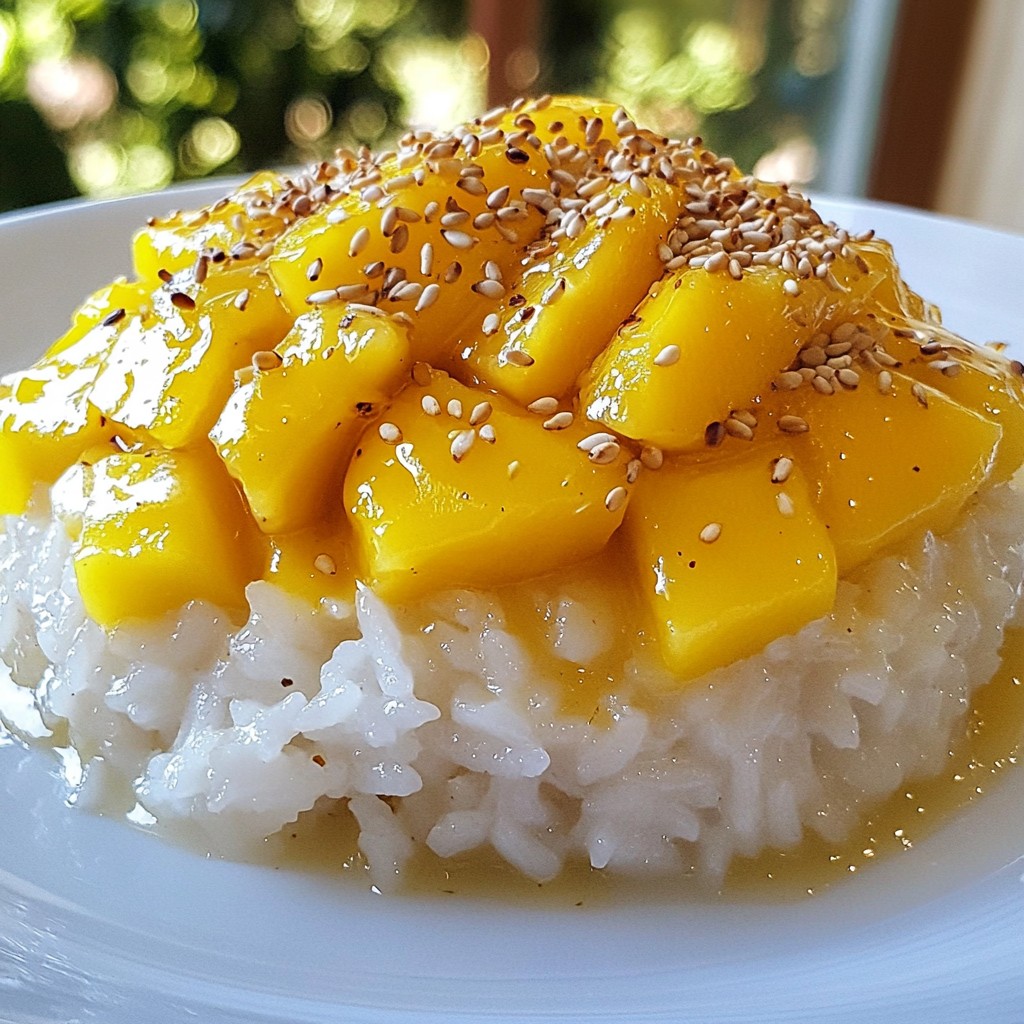
Are you ready to indulge in the creamy, sweet delight of Thai Mango Sticky Rice? This beloved dessert blends tender glutinous rice with rich coconut milk and fresh, ripe mangoes. Whether you’re a seasoned chef or a beginner, this guide will walk you through the steps to create this delicious treat. Get ready to impress your family and friends with a flavor experience they won’t forget!
Why I Love This Recipe
- Exotic Flavors: This dish beautifully combines the sweetness of ripe mangoes with the rich creaminess of coconut milk, offering a delightful taste of Thailand.
- Simple Preparation: The steps are straightforward and require minimal ingredients, making it accessible for both novice and experienced cooks.
- Perfect for Any Occasion: Whether it’s a casual dessert or a festive celebration, this dish impresses and satisfies any gathering.
- Customizable Garnishes: With options like sesame seeds or mung beans, you can easily add a personal touch and enhance the dish’s texture.
Ingredients
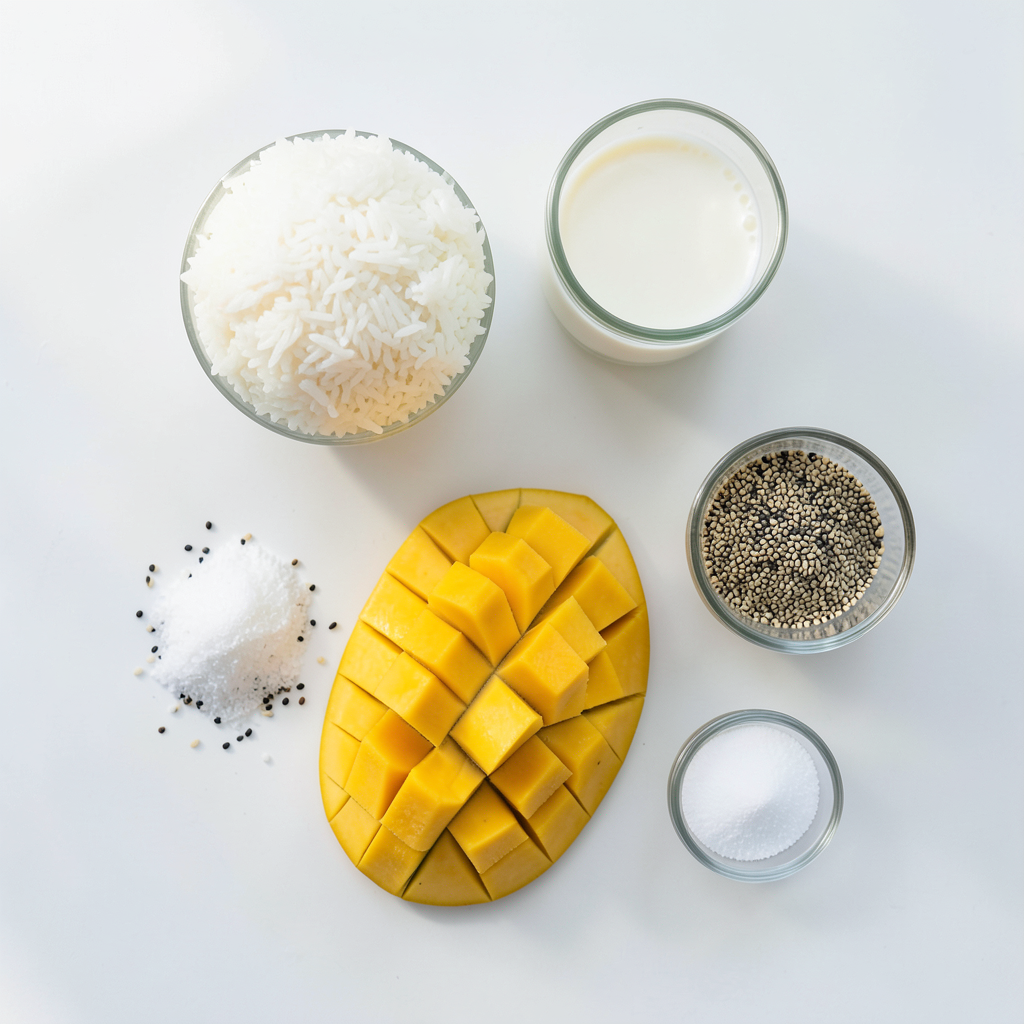
List of Ingredients
- 1 cup glutinous rice
- 1 ¼ cups rich coconut milk
- ½ cup granulated sugar
- ¼ teaspoon salt
- 2 ripe mangoes, peeled and delicately sliced
- Optional garnishes: Sesame seeds or mung beans
To make Thai mango sticky rice, you need a few key ingredients. First, glutinous rice is essential. This rice gives the dish its signature sticky texture. Next, rich coconut milk adds creaminess and flavor. Granulated sugar sweetens the dish, while salt enhances the taste.
Fresh, ripe mangoes are a must. Their sweetness pairs perfectly with the coconut rice. You can add optional garnishes like sesame seeds or mung beans for extra texture. These ingredients create a beautiful dessert. Each one plays a key role in making this dish a delightful treat.
Step-by-Step Instructions
Rinse and Soak the Rice
First, rinse the glutinous rice well. This step helps remove extra starch. Rinse until the water runs clear. This makes the rice less sticky. After rinsing, soak the rice in fresh water. Aim for a soak time of at least 4 hours. Overnight is best for a great texture.
Steam the Rice
After soaking, drain the rice. Place it in a steamer basket lined with cheesecloth. Make sure the steamer water is boiling. Steam the rice for 25 to 30 minutes. The rice should be tender and sticky when done.
Prepare the Coconut Sauce
While the rice steams, grab a medium saucepan. Mix the coconut milk, sugar, and salt in it. Heat the mixture over medium heat. Stir gently until the sugar dissolves. Do not let it boil. Reserve half a cup of this sauce for later.
Mix Rice and Coconut
Once the rice is cooked, move it to a mixing bowl. Pour the remaining coconut sauce over the hot rice. Gently fold the mixture using a spatula. Make sure every grain is covered. Let it rest for 15 minutes. This allows the rice to soak up the coconut flavor.
Plate the Dish
To serve, take a portion of sticky rice. Mold it into a neat shape on a plate. Add the sliced mango beside the rice. This makes a pretty presentation. Drizzle the reserved coconut sauce over the rice. This adds a nice glossy finish.
Garnish
For a fun touch, sprinkle sesame seeds or mung beans on top. This adds crunch and looks great. It enhances both the texture and visual appeal. Enjoy your beautiful dish!
Tips & Tricks
Choosing the Right Mango
For the best Thai mango sticky rice, choose ripe mangoes. The best types are Nam Dok Mai and Carabao. They have sweet, juicy flesh and smooth skin. Look for mangoes that are slightly soft when you press them gently. This means they are ripe and ready to eat. Avoid mangoes that are too hard or have dark spots. You want the fruit to complement the creamy sticky rice perfectly.
Achieving the Perfect Rice Texture
To know if your rice is cooked right, feel it. The rice should be tender yet sticky. When you steam it, it should stick together but not be mushy. After steaming for about 25 to 30 minutes, try a small spoonful. If it holds its shape but feels soft, it’s ready. Properly cooked rice is key to a great presentation and taste.
Serving Suggestions
Serve Thai mango sticky rice with a refreshing drink. Coconut water or Thai iced tea pairs well with this dessert. You can also add toppings like sesame seeds or mung beans for extra texture. These not only look lovely but also add a fun crunch. Enjoy your dessert with friends or family for a delightful experience!
Pro Tips
- Soaking Time is Key: Ensure the glutinous rice is soaked for at least 4 hours or overnight. This step is crucial for achieving the perfect sticky texture.
- Gentle Steaming: When steaming the rice, make sure the water is boiling before placing the steamer basket on top. This helps the rice cook evenly and become tender.
- Control the Heat: When preparing the coconut sauce, heat it over medium heat and avoid boiling. This preserves the rich flavor and creamy texture of the coconut milk.
- Presentation Matters: Mold the sticky rice into a neat shape on the plate and arrange the mango slices artfully. A beautiful presentation enhances the overall dining experience.
Variations
Coconut Milk Substitutes
If you want a lighter version of this dish, try using light coconut milk. This change keeps the creamy flavor but cuts some fat. If you prefer a non-dairy option, use almond milk or oat milk. These options provide a similar texture while keeping it vegan. Remember, the flavor will change slightly, but it can still taste great.
Additions and Flavor Enhancements
You can boost the flavor of your sticky rice by adding pandan leaves. These leaves give a lovely aroma and hint of flavor. Just steep them in your coconut milk while it warms. You can also add exotic fruits like lychee or dragon fruit. These fruits add a pop of color and taste to your dessert. You can mix and match flavors to make it uniquely yours.
Presentation Variations
For special occasions, get creative with your plating. Use a ring mold to shape the rice into perfect rounds. This makes the dish look fancy. You can also serve it in small bowls for a fun twist. Try adding edible flowers for a bright touch. This not only looks nice but also impresses your guests. The key is to make it look as good as it tastes!
Storage Info
Storing Leftovers
To keep your Thai mango sticky rice fresh, store it in an airtight container. Let it cool to room temperature before sealing. Refrigerate it right away for the best taste. The sticky rice can dry out if left uncovered. You can also separate the mango slices to keep them fresh longer.
Reheating Techniques
When reheating, you want to keep the rice soft and moist. The best way is to use a microwave. Add a splash of coconut milk to the rice and cover it. Heat in short bursts, stirring in between, until warm. You can also steam it lightly if you prefer. This will help maintain its original texture.
Shelf Life
You can store Thai mango sticky rice in the fridge for about 3 days. After that, it may lose its freshness. If you freeze it, it can last up to a month. Just remember that freezing may change the texture. Enjoy it while it’s still tasty!
FAQs
What is Thai Mango Sticky Rice?
Thai Mango Sticky Rice is a sweet dish from Thailand. It combines sticky rice and ripe mangoes. This dessert celebrates the end of the rice harvest. People enjoy it during festivals and special occasions. The dish features a rich coconut sauce poured over the rice. It is not just tasty; it’s also a symbol of Thai culture.
Can I use regular rice instead of glutinous rice?
No, you should not use regular rice. Regular rice will not give the same sticky texture. Glutinous rice, also known as sweet rice, is key for this dish. It absorbs the coconut milk well and stays chewy. Using regular rice can change the taste too. You won’t get that authentic feel and flavor.
Is Thai Mango Sticky Rice gluten-free?
Yes, Thai Mango Sticky Rice is gluten-free. The main ingredients are glutinous rice and coconut milk. Neither of these contains gluten. This means people with gluten sensitivities can enjoy it. Always check any sauces or toppings for hidden gluten.
How can I make this dish vegan?
Making Thai Mango Sticky Rice vegan is simple. Replace granulated sugar with coconut sugar. Check that the coconut milk is pure and without additives. You can also skip the optional garnishes if needed. The dish remains delicious and true to its roots.
Where can I find authentic Thai Mango Sticky Rice?
You can find this dish at many Thai restaurants. Look for places that specialize in desserts. Street markets in Thailand often feature great options too. If you are nearby, check out local Thai food festivals. You might find vendors selling this delightful dessert.
Thai Mango Sticky Rice combines sweet mango and creamy coconut rice for a tasty treat. We covered all the essential steps, from soaking the rice to garnishing your dish. I shared tips for choosing the best mango and revealed ways to personalize your recipe. Remember, this dish is not just food; it’s a cultural delight. Enjoy making it your own while embracing the flavors of Thailand. With the right care, you’ll impress everyone at the table.