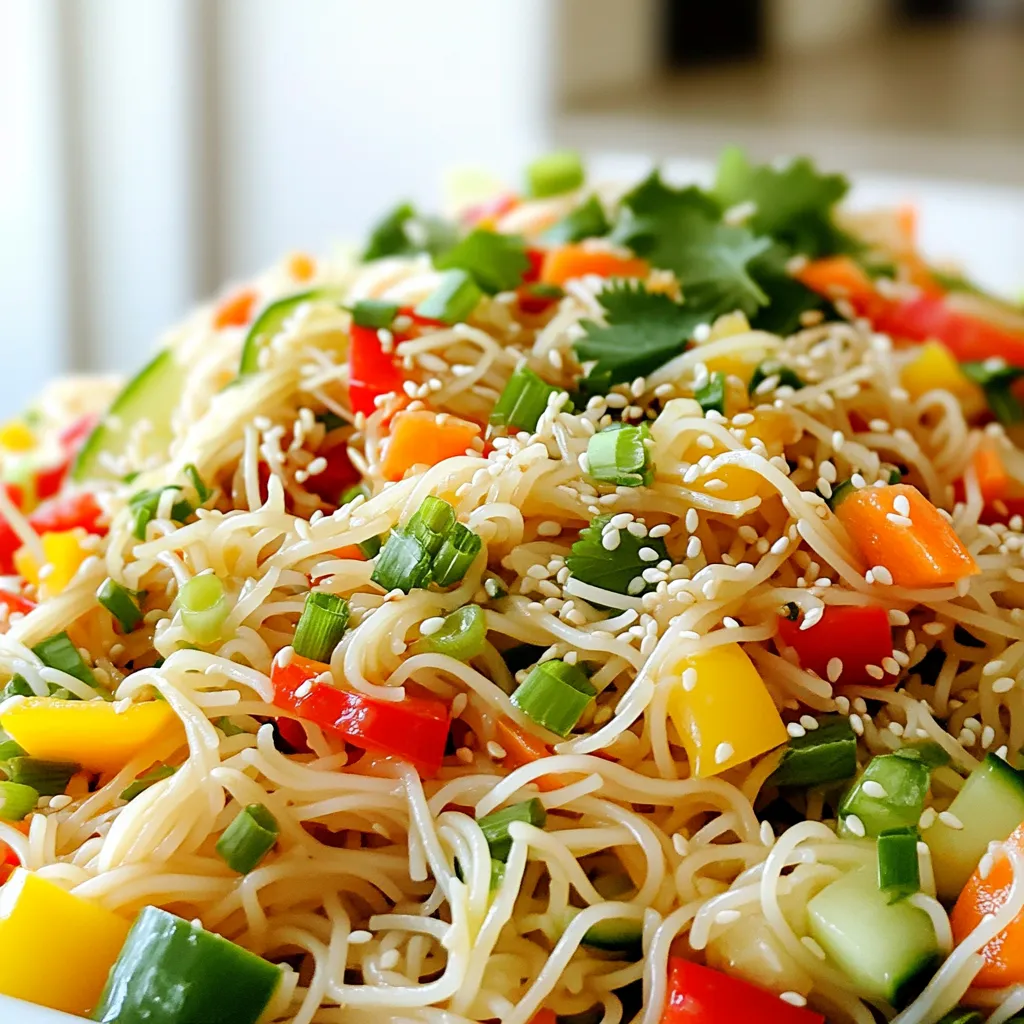
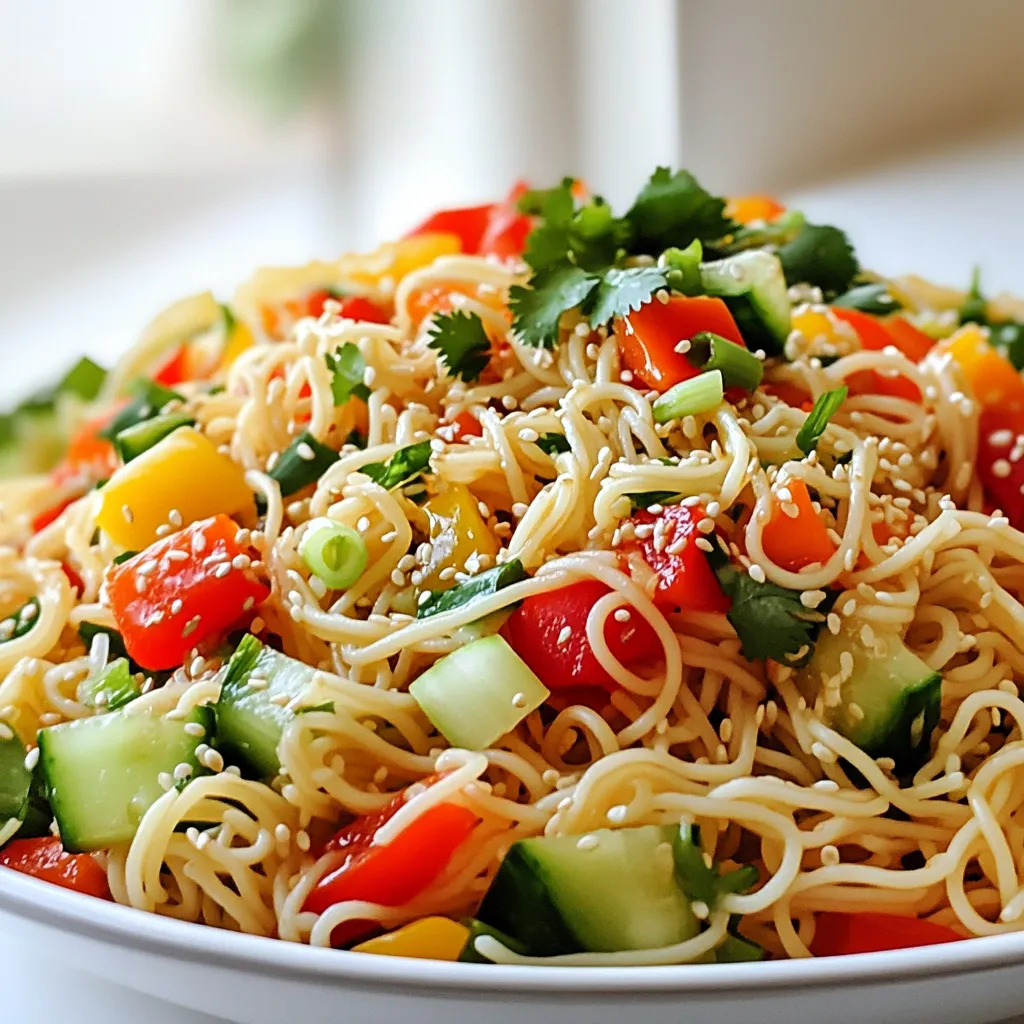
Looking for a quick and tasty meal? My Sesame Ginger Noodle Salad takes just 15 minutes to make! Packed with fresh vegetables and a zesty dressing, it’s a delightful dish that’s sure to impress. Whether you’re in a rush or planning a light lunch, this recipe is your new go-to. Let’s dive into the simple steps and ingredients that make this salad both healthy and delicious!
Ingredients
List of Main Ingredients
– 200g rice noodles
– 2 tablespoons sesame oil
– 1 tablespoon fresh ginger, grated
– 2 cloves garlic, minced
– 1 cup bell peppers (red and yellow), thinly sliced
– 1 cup carrots, julienned
– 1 cup cucumber, julienned
– ¼ cup green onions, chopped
– 2 tablespoons soy sauce (or tamari for gluten-free)
– 1 tablespoon honey or maple syrup
– 1 tablespoon rice vinegar
– 2 tablespoons sesame seeds
– Fresh cilantro for garnish (optional)
When I make this salad, I choose fresh, colorful ingredients. Each one adds flavor and crunch. Rice noodles are my base. They soak up the dressing well. I love using sesame oil for its rich taste. Fresh ginger and garlic give a nice kick to the dish.
For the veggies, I pick bell peppers for sweetness and carrots for crunch. Cucumbers add a refreshing bite, while green onions bring a mild bite. The soy sauce ties it all together. Honey or maple syrup adds a touch of sweetness. Rice vinegar gives a tangy note.
Lastly, I sprinkle sesame seeds on top. They add a nutty flavor and a nice crunch. Fresh cilantro is optional but adds a lovely aroma. Enjoying this salad feels like a burst of flavors in every bite!
Step-by-Step Instructions
Cooking the Noodles
First, grab a large pot and fill it with water. Place it on the stove and bring it to a rolling boil. You will want to wait until the bubbles are big and fast. When the water boils, add in the 200g of rice noodles. Cook them for 4 to 6 minutes. Check the noodles often. They should be tender but still firm when you bite them. Once cooked, drain the noodles in a colander. Rinse them under cold water. This stops the cooking and keeps them from sticking together. Set the noodles aside for later.
Preparing the Dressing
Next, it’s time to make the dressing. In a small bowl, add 2 tablespoons of sesame oil, 1 tablespoon of grated ginger, and 2 cloves of minced garlic. Also, add 2 tablespoons of soy sauce, 1 tablespoon of honey or maple syrup, and 1 tablespoon of rice vinegar. Use a whisk to mix these ingredients well. You want a smooth dressing that tastes great. Always taste it! If it needs more sweetness or tang, feel free to add more honey or vinegar. Your taste buds are the best guide.
Combining Ingredients
Now, let’s mix everything together. In a large bowl, add 1 cup each of thinly sliced bell peppers, julienned carrots, and julienned cucumber. Also, include ¼ cup of chopped green onions. Toss the vegetables gently to combine them. Then, fold in the cooked rice noodles. Be careful when mixing; you don’t want to break the noodles. After that, drizzle the dressing over the noodles and vegetables. Use tongs or a large spoon to toss everything together. Make sure all the ingredients are coated in that tasty dressing. Finally, sprinkle 2 tablespoons of sesame seeds over the top, and give it one last gentle toss. You can adjust the taste again if needed.
Tips & Tricks
Perfecting the Dressing
To get the best dressing, you can adjust the taste. If it is too sweet, add more soy sauce. If it is too sour, add a touch of honey or maple syrup. For a vegan option, always use maple syrup instead of honey. This keeps your dish tasty and kind to all diets.
Serving Suggestions
Garnish your salad with fresh cilantro for a burst of flavor. Cilantro adds color and a fresh taste. For a colorful display, serve the salad in clear bowls. This lets the bright veggies shine. You can also sprinkle extra sesame seeds on the side for a fun touch.
Common Mistakes to Avoid
One mistake is overcooking the noodles. They should be firm, not mushy. Rinse them well to stop cooking. Another mistake is under-seasoning the dressing. Always taste it before adding to the salad. It should be balanced and flavorful. Don’t skip this step—it makes a big difference!
Variations
Adding Proteins
You can easily make this salad heartier by adding proteins. Great options include:
– Tofu
– Chicken
– Shrimp
For tofu, use firm tofu. Press it to remove extra water. Cut it into cubes and pan-fry until golden. For chicken, grill or sauté thin strips until cooked through. For shrimp, cook them until they turn pink and curl. Each protein adds flavor and boosts nutrition.
Alternative Vegetables
Switch up the veggies based on your taste or season. Here are some great ideas:
– Snap peas
– Broccoli florets
– Shredded cabbage
Snap peas add a nice crunch. Broccoli brings a healthy green touch. Shredded cabbage offers a different texture. Each change gives the salad a new flavor profile. Mix and match for fun!
Dressing Variations
You can play with the dressing for new tastes. Try these options:
– Swap sesame oil for olive oil or avocado oil.
– Use rice vinegar with apple cider vinegar or red wine vinegar.
For a kick, add chili flakes or sriracha. Fresh herbs like mint or basil can brighten the flavor. These small changes keep the salad exciting and fresh!
Storage Info
How to Store Leftovers
To keep your Sesame Ginger Noodle Salad fresh, use airtight containers. Glass or plastic containers work well. Make sure the salad is cool before sealing. Store in the fridge for up to three days. Don’t forget to label your containers with the date!
Reheating Instructions
When you want to enjoy leftover noodles, use a microwave or stovetop. For the microwave, place a portion in a bowl. Add a splash of water to prevent drying out. Heat for one minute, then stir. For the stovetop, warm in a pan over low heat. Add a bit of sesame oil to help keep the noodles smooth.
Freezing Options
You can freeze the noodles and dressing separately. When freezing, place them in freezer-safe bags. Remove as much air as possible. The noodles can last up to two months in the freezer. To thaw, place them in the fridge overnight. Reheat as mentioned above and mix with the fresh dressing before serving.
FAQs
What can I substitute for rice noodles?
If you do not have rice noodles, you can use other types of noodles. Good options include soba noodles or whole wheat spaghetti. If you prefer a gluten-free choice, try zucchini noodles or spiralized veggies.
Can I make this salad ahead of time?
Yes, you can make this salad ahead of time. Prepare the noodles and veggies, then store them separately. Mix them with the dressing just before serving. This keeps everything fresh and crunchy.
How long will the Sesame Ginger Noodle Salad last in the fridge?
The salad can last up to three days in the fridge. Store it in an airtight container. However, the noodles may soften the longer it sits, so enjoy it sooner for the best texture.
Is this recipe gluten-free?
Yes, this recipe can be gluten-free. Just use tamari instead of soy sauce. Ensure all your other ingredients are gluten-free as well. This way, you can enjoy the salad without worry.
Can I use bottled dressing instead of homemade?
You can use bottled dressing if you prefer. Just check the ingredients to ensure it fits your taste. However, homemade dressing allows you to control the flavors and adjust it to your liking.
This blog post covered how to make a tasty Sesame Ginger Noodle Salad. We explored key ingredients, cooking steps, and tips to avoid common mistakes. Using fresh veggies and a balanced dressing keeps this dish vibrant and full of flavor. Remember, you can tweak it to fit your likes, adding proteins or trying new vegetables. Whether you eat it fresh or save leftovers, this salad is sure to please. Enjoy your cooking adventure and make it your own!